Slipped Slate Repairs Before Winter Storms
16 November 2026
Share
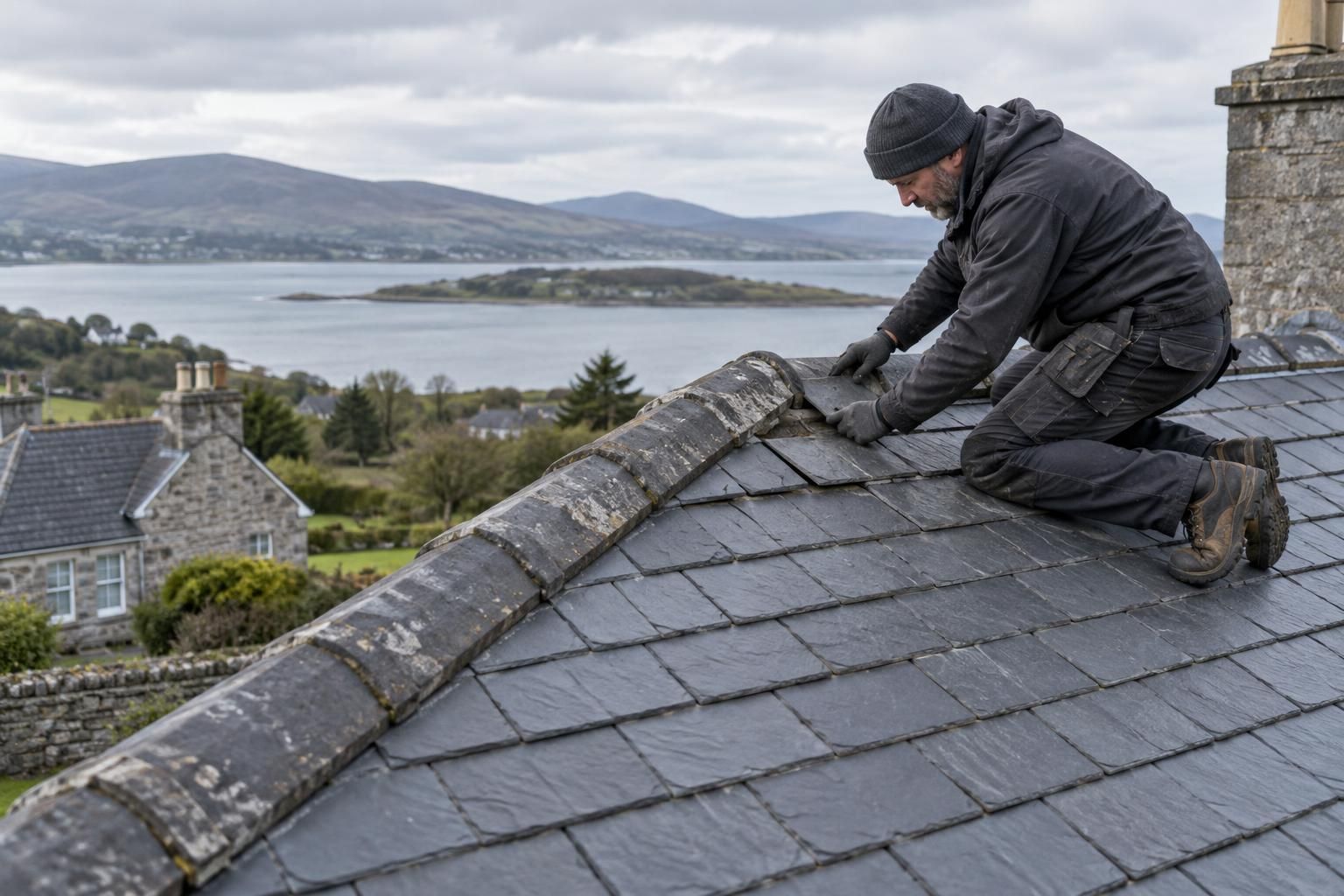
Why Slipped Slate Repairs Matter Before Winter Storms Hit
Slipped slate repairs reset or replace roof slates that have come loose from their battens, closing the gap before rain and wind get underneath. Fixing slipped slates early, and especially before a winter storm hits, stops a small leak turning into damp patches, rotten timber and a much larger repair bill.
This guide looks at why slates slip loose on Irish roofs, the signs to watch for from the ground and in the attic, how we carry out a typical slipped slate repair, and why getting this sorted before the storm season arrives matters so much for homes across Longford and the rest of Ireland.
What Causes Slates To Slip On An Irish Roof
Roof slates are held in place by nails driven through the top of each slate into the timber battens underneath. Over time, those nails corrode, especially on older roofs, and the slate is left sitting loose rather than fixed. A gust of wind, a build-up of moss, or simply decades of exposure to Irish rain is often enough to work a slate free of its fixing.
Felt and battens that have weakened underneath also play a part. If the roofing felt has perished or the battens have rotted slightly, slates have less to grip onto and are more likely to slip out of line after heavy wind or driving rain. This is particularly common on roofs that are twenty years old or more, where the original fixings were never designed to last indefinitely.
We see slipped slates on both tiled and slated roofs across Ireland, though natural slate tends to show the problem first, since a slipped slate leaves an obvious gap rather than sitting flush against its neighbours.
Warning Signs Of Slipped Roof Slates To Watch For
You do not need to get up on a ladder to spot most of the warning signs. A lot of slipped slates can be picked up from the ground, from a neighbouring window, or from inside the attic on a bright day.
- A slate sitting at an angle, overlapping its neighbour unevenly, or appearing to have dropped lower than the slates around it
- Daylight showing through small gaps in the roof when you look up from inside the attic
- Damp patches, staining or a musty smell developing on ceilings or in the attic after heavy rain
- A slate or piece of slate found in the garden or guttering after windy weather
- Moss or lichen building up heavily around one area of the roof, which can lift slates slightly out of place
If you notice any of these signs, it is worth having a roofer take a closer look before the next spell of wind and rain. We cover this in more detail in our guide to spotting roof damage before it becomes costly, which goes through what to check from the ground and the attic.
How We Carry Out Slipped Slate Repairs
A slipped slate repair is usually a straightforward job once we are up on the roof, but it needs to be done carefully so the surrounding slates are not disturbed. Our approach follows the same steps on most pitched roofs we work on.
- We inspect the roof from a ladder or, where needed, from scaffolding or a roof ladder, to confirm which slates have slipped and check the condition of those around them.
- Each slipped slate is carefully lifted using a slate ripper to free the old fixing without cracking the slate or the ones beside it.
- Where the original nail has corroded, the slate is refitted using a corrosion-resistant fixing, such as a lead or copper tack and disc, so it will not work loose again in the same way.
- We check the felt and battens underneath the repaired area for any damage, and replace them where they have weakened.
- Once the slate is reset and secure, we check it sits flush with the surrounding slates and sheds water properly, then clear away any debris before we leave.
Where a slate has cracked or gone missing rather than simply slipped, we replace it with a matching slate so the repair blends in with the rest of the roof. For roofs with a lot of slipped or cracked slates, or where the felt and battens have aged badly, a wider roof repair may make more sense than patching slates one at a time.
Why Winter Roof Maintenance Matters Before A Storm Hits
Ireland gets more than its share of wind and rain, and pitched roofs across the country take a battering every winter. A slate that has only slipped slightly in October can be torn away completely once a storm brings sustained winds and horizontal rain, turning a small repair into a bigger one almost overnight.
Carrying out winter roof maintenance before the weather turns gives a roof the best chance of getting through storm season without a leak. Resetting loose slates, clearing gutters and checking flashing around chimneys all reduce the number of weak points a storm can find.
It also means less disruption if severe weather is forecast. A roof that has already been checked and repaired is far less likely to need an emergency call-out in the middle of a storm, when access and conditions make repairs slower and more difficult. Our guide to emergency roof repairs in Ireland covers what to do if storm damage does happen despite this.
What Happens If Slipped Slates Are Left Unrepaired
A single slipped slate does not always cause an immediate leak, which is part of why it is easy to put off fixing. Water can track sideways under the felt for some distance before it finds its way through to a ceiling, so by the time a stain appears inside, the damage underneath may already be more extensive.
Left over a full winter, a slipped slate lets in rain that soaks the felt, dampens insulation and can begin to rot the timber battens and rafters underneath. Once timber is affected, a repair that started as resetting one slate can turn into replacing a section of roof structure, which costs considerably more and takes longer to put right.
Leaving gaps unrepaired also gives wind somewhere to get a grip, which is why a roof with a few slipped slates tends to lose more slates in the next storm rather than fewer. Dealing with slipped slate repairs promptly is one of the most cost-effective things a homeowner can do to protect a roof over the winter months.
Booking A Roof Inspection Across Longford And Ireland
We carry out roof inspections for homes and businesses across County Longford and throughout Ireland, checking for slipped, cracked or missing slates along with the condition of flashing, felt and guttering. An inspection before winter sets in gives you a clear picture of what, if anything, needs attention before the next storm arrives.
Booking slipped slate repairs ahead of winter, rather than waiting for a leak to appear, is the more straightforward and usually the more affordable route. It means repairs can be carried out in better weather, with full access to the roof, rather than rushed through during a storm warning.
If you have noticed a slipped slate, a damp patch, or simply want a roof checked before winter storms arrive, Patrick Hannifin Roofing And Guttering Services carries out slipped slate repairs and roof inspections across Longford and the rest of Ireland. Get in touch with our team to arrange a visit, call us on 085 754 7244, or email patrickhannifinroofing@gmail.com.
Recent Posts