How Ponding Water Damages a Flat Roof in Ireland
2 November 2026
Share

What Ponding Water Does to a Flat Roof
Ponding water is rainwater that sits on a flat roof for more than 48 hours after rain stops. On Irish roofs it speeds up wear on felt, fibreglass and liquid coatings, adds weight to the deck and turns any small split into a leak. In Longford and across Ireland, steady rain means ponds rarely get time to dry out.
This article explains why water collects on a flat roof, the damage it does to each type of covering, how to check your own roof safely, and the flat roof repairs we use to get the water draining again. If you have spotted a puddle on your extension, garage or dormer roof this autumn, it will help you decide what to do next.

Why Water Collects on a Flat Roof
No flat roof is truly flat. A well-built one has a gentle fall that carries water to a gutter, outlet or hopper. Ponding starts when something interrupts that path, and on most roofs we inspect it comes down to one or more of the causes below.
- Too little fall. Many older extensions and garages were built with almost no slope, so water has nowhere to go once it lands.
- A sagging deck. Timber joists and chipboard or OSB decking can deflect over time, especially if the deck has been wet. A dip of a few millimetres is enough to hold a pond.
- Blocked outlets and gutters. Leaves, moss and silt build up at the edge of the roof in autumn, and the water backs up across the surface.
- Poor repairs and patches. Thick overlapping patches, upstands and raised joints act like small dams that trap water behind them.
- Crushed insulation. On warm-deck roofs, foot traffic or water damage can compress insulation boards and create low spots.
It is worth knowing the difference between ponding and normal drainage. A thin film that is gone within a day or two is not usually a concern. Water that is still there two days after the rain has stopped, or a dirty ring that shows where a pond keeps forming, points to a drainage problem that needs attention.
How Ponding Water Damages a Flat Roof Covering
Standing water attacks a flat roof in several ways at once. The damage is slow at first, which is why many homeowners only notice it when a stain appears on the ceiling below.
Torch-on felt
Torch-on felt is a bitumen membrane, and bitumen ages faster when it stays wet and is then baked by sunlight through a shallow pool of water. The mineral chippings on the cap sheet wash away from the low spot, leaving the bitumen exposed. Laps and seams under a pond are under constant pressure, so a joint that would cope with running water can start to let it through.
Fibreglass
A fibreglass (GRP) roof is one continuous layer, so it handles standing water better than most coverings. Even so, the topcoat can soften, discolour and craze where water sits for long periods, and any hairline crack at a joint or trim edge will take in water far more quickly under a pond than on a dry surface.
Liquid waterproofing
Liquid systems such as Lava 20 form a seamless coating, but they rely on correct thickness and a sound surface underneath. Where a pond sits on an older, poorly prepared coating, it can lift at the edges or wear thin, and dirt left behind as the water evaporates holds moisture against it.
Damage beyond the covering
Water weighs about one kilogram per litre, so a pond a few centimetres deep over a couple of square metres adds a real load to joists that were never designed for it. More sag means a deeper pond, which means more weight. Silt and leaves settle in the low spot, moss and algae take root, and in a cold snap the water can freeze and expand, opening up any small crack. Once water reaches the deck, it soaks chipboard, rots timber and wets insulation, which then stops working properly.

Signs of Ponding Water and Flat Roof Drainage Problems
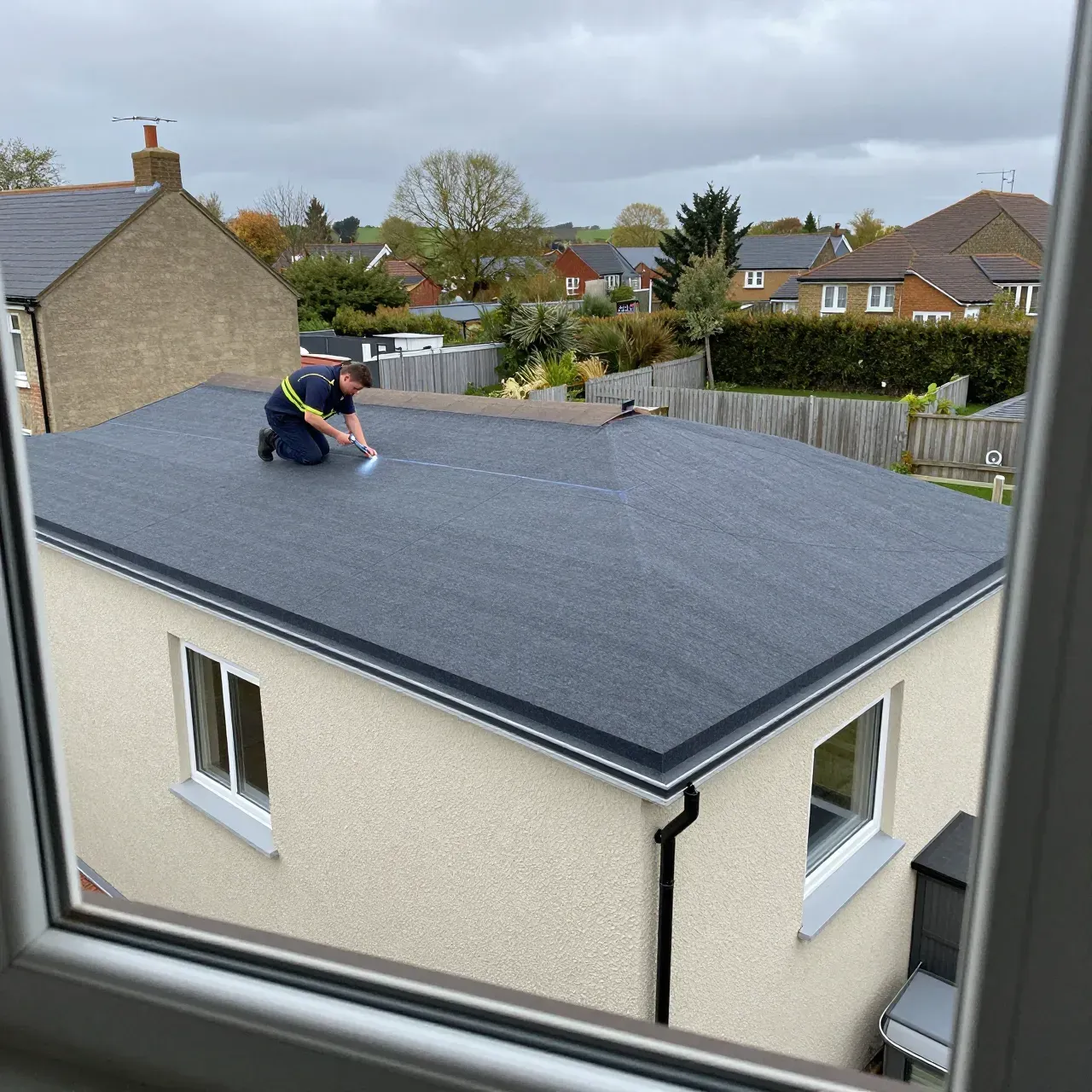
You do not need to climb onto the roof to spot most of the warning signs. Many flat roofs on extensions can be seen from an upstairs window, and that is the safest way to check. Look for the following after a spell of rain.
- Wait two days after heavy rain and look for any water still sitting on the surface.
- On a dry day, look for dark rings, silt lines or green patches that show where water usually collects.
- Check the gutter or outlet at the low edge for leaves, moss or overflowing water.
- Look for missing chippings, cracked coating, blisters or lifted edges around the low area.
- Inside, check the ceiling under the flat roof for stains, flaking paint or a musty smell.
Please do not walk on a flat roof to sweep water off. Wet felt and fibreglass are slippery, an older deck may not take your weight, and brushing can damage a worn surface. If you see any of these signs, it is better to have a roofer take a look.
How We Fix Ponding on Flat Roofs
The right fix depends on why the water is collecting and how much damage it has already done. When we assess a roof, we look at the fall, the outlets, the condition of the covering and whether the deck underneath is sound. Then we recommend the repair that suits that roof rather than a one-size answer.
Clearing and improving drainage
Sometimes the cause is simply a blocked outlet or a gutter that is too high, too small or sagging. Clearing debris and correcting the gutter or outlet can stop ponding straight away. Our gutter repairs and cleaning service covers this, and it is a sensible first check before any larger work.
Repairing low spots and damaged areas
Where a small area has dipped, the deck can be built up or the damaged section replaced, then the covering made good with a compatible material. A localised repair is only worth doing if the rest of the roof is in good condition, so we will tell you honestly if a patch would just move the problem along.
Re-covering with correct falls
If the roof has little or no fall, or the deck is soaked and the covering is near the end of its life, the long-term answer is usually to strip it back, replace any rotten decking and create proper falls before laying a new covering. We install fibreglass, torch-on felt and Lava 20 liquid waterproofing, and we will explain the strengths of each for your roof. Our article comparing fibreglass, torch-on felt and liquid flat roofing goes into more detail on how they differ.
What Affects the Cost of Fixing a Ponding Flat Roof
Every roof is different, so we always price after an inspection. The main things that decide the cost are listed below.
- Whether the cause is drainage only, or the deck and falls need correcting.
- How much of the timber deck and insulation has been soaked or rotted.
- The size of the roof and the covering you choose.
- Access, such as scaffolding needs or a roof above a conservatory or busy entrance.
- Details like upstands, roof lights, walls and flashings that need to be reworked.
Acting early usually keeps the job smaller. A blocked outlet caught in November is a quick fix, while a pond left through the winter can lead to wet insulation and a rotten deck by spring. Our guide to blisters and bubbles on a flat roof covers another early warning sign worth checking at the same time.
Protecting Your Flat Roof This Winter
Ponding water is one of the most common reasons flat roofs fail early in Ireland, but it is also one of the easiest to catch. Keep the outlets and gutters clear of leaves, look at the roof after heavy rain, and get any standing water checked before frost and winter storms make it worse. Whether you are in Longford or elsewhere in Ireland, a quick inspection now can save a full replacement later.
If you have water sitting on your flat roof, contact Patrick Hannifin Roofing and we will take a look and talk you through the options. Call us on 085 754 7244 or email patrickhannifinroofing@gmail.com.
Recent Posts