Roof Maintenance Tips for Homeowners in Ireland
7 April 2025
Share
A Practical Roof Maintenance Routine for Irish Homes
A well-built roof can protect a house for many decades, but only if it is looked after. In Ireland, roofs face almost constant rain, strong Atlantic winds, frost in winter and damp conditions that encourage moss and algae. Most serious roof problems start as small defects that could have been spotted and fixed cheaply. A simple roof maintenance routine, carried out through the year, keeps those small defects from turning into leaks and costly repairs.
This article sets out practical roof maintenance tips for homeowners across Ireland. It covers what you can check safely yourself, what to do in each season, the warning signs that need a roofer and how often a professional inspection makes sense.
Safety Comes First
Most roof maintenance checks can be done from the ground, from an upstairs window or from inside the attic. Climbing onto a roof is dangerous, particularly when slates and tiles are wet or covered in moss, and many roof coverings cannot take a person's weight without breaking. Leave any work on the roof surface, and anything that needs a ladder above single-storey height, to an experienced roofer with the right access equipment.
A pair of binoculars is one of the most useful tools for checking a roof. From the garden or the road you can see slates, ridge tiles, chimneys and gutters clearly without leaving the ground.
Check the Roof From the Ground
Walk around the house a few times a year and look carefully at each roof slope. Look for:
- Slates or tiles that are cracked, slipped out of line or missing
- Ridge and hip tiles that look loose, with gaps or missing mortar
- Heavy moss or lichen, especially on north-facing slopes
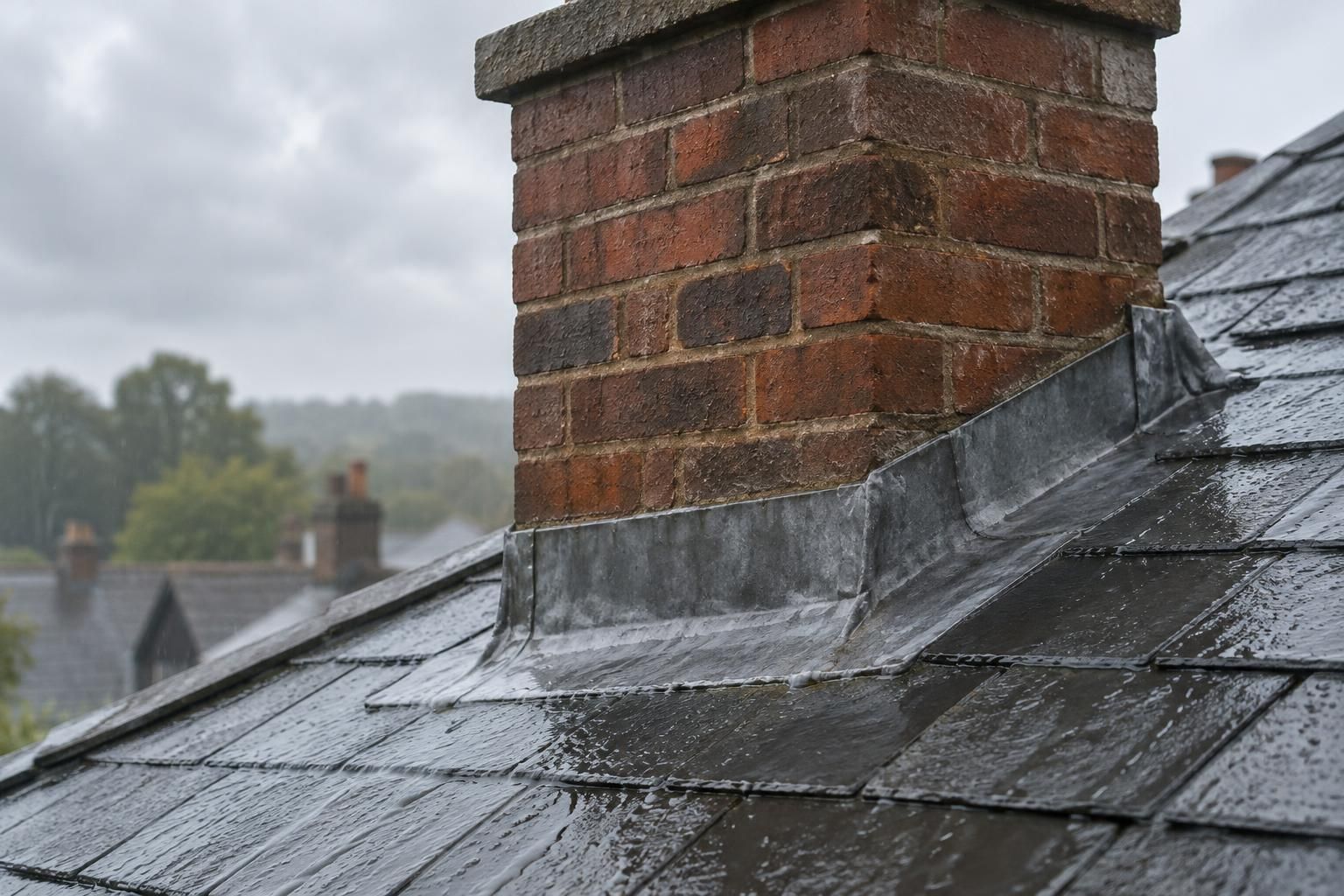
- Chimney stacks with crumbling mortar, cracked render or tilting pots
- Lead flashing that has lifted or slipped at chimneys and walls
- Sagging lines in the roof, which can point to problems with the timbers
- Gutters that sag, overflow or have plants growing in them
Take photographs of anything that looks wrong. They make it easier to describe the problem to a roofer and to see whether it is getting worse.
Look Inside the Attic
The attic tells you a great deal about the condition of the roof. Take a torch and check once or twice a year, ideally during or just after heavy rain:
- Look for daylight showing through the roof, which means a gap in the covering.
- Check the underside of the felt or membrane for wet patches, tears or sagging.
- Look at rafters and battens for water staining, dark patches or soft timber.
- Check the insulation for damp or compressed areas.
- Look around the chimney stack and any vent pipes for signs of water.
- Feel for musty, damp air, which can point to poor ventilation and condensation.
Condensation is a common problem in Irish attics, especially after extra insulation has been added. Black mould on the underside of the roof or on timbers often means the roof space needs better ventilation rather than a roof repair.
Keep Gutters and Valleys Clear
Blocked gutters are one of the most common causes of damp in Irish homes. When leaves, moss and silt block a gutter or downpipe, water spills over the edge, soaks the fascia boards and runs down the walls. Gutters should be cleared at least once a year, ideally in late autumn after the leaves have fallen, and twice a year on houses near trees.
Valleys, where two roof slopes meet, collect leaves and moss in the same way. A blocked valley can force water sideways under the slates. Valleys should be checked and cleared as part of a gutter clean. Our gutter repairs page covers cleaning and repair of gutters and downpipes.
Deal With Moss and Overhanging Trees
Moss is more than a cosmetic problem. It holds water against slates and tiles, which speeds up frost damage, and it washes into gutters and blocks them. Light moss can be treated with a biocide that kills it so it gradually washes away. Heavy moss is best removed carefully by a roofer, followed by a biocide treatment, without damaging the roof surface.
Cut back branches that overhang the roof. They drop leaves into gutters, keep the roof damp and shaded, and can scrape or break slates in high winds. Cleaned roofs can also be protected with a breathable coating, explained on our roof cleaning and painting page.
A Seasonal Roof Maintenance Calendar
Spring
Check the roof for damage after the winter storms. Look for slipped slates, loose ridge tiles and damaged flashing, and book any repairs before the summer rush.
Summer
Summer is the best time for larger jobs that need dry weather, such as repointing chimneys, re-bedding ridge tiles, coating a roof or replacing a flat roof covering.
Autumn
Clear gutters, downpipes and valleys once the leaves have fallen. Trim back overhanging branches and check the attic before the wet season starts.
Winter
Check the roof from the ground after each major storm. Look in the attic after heavy rain and act quickly on any sign of water.
Flat Roof Maintenance
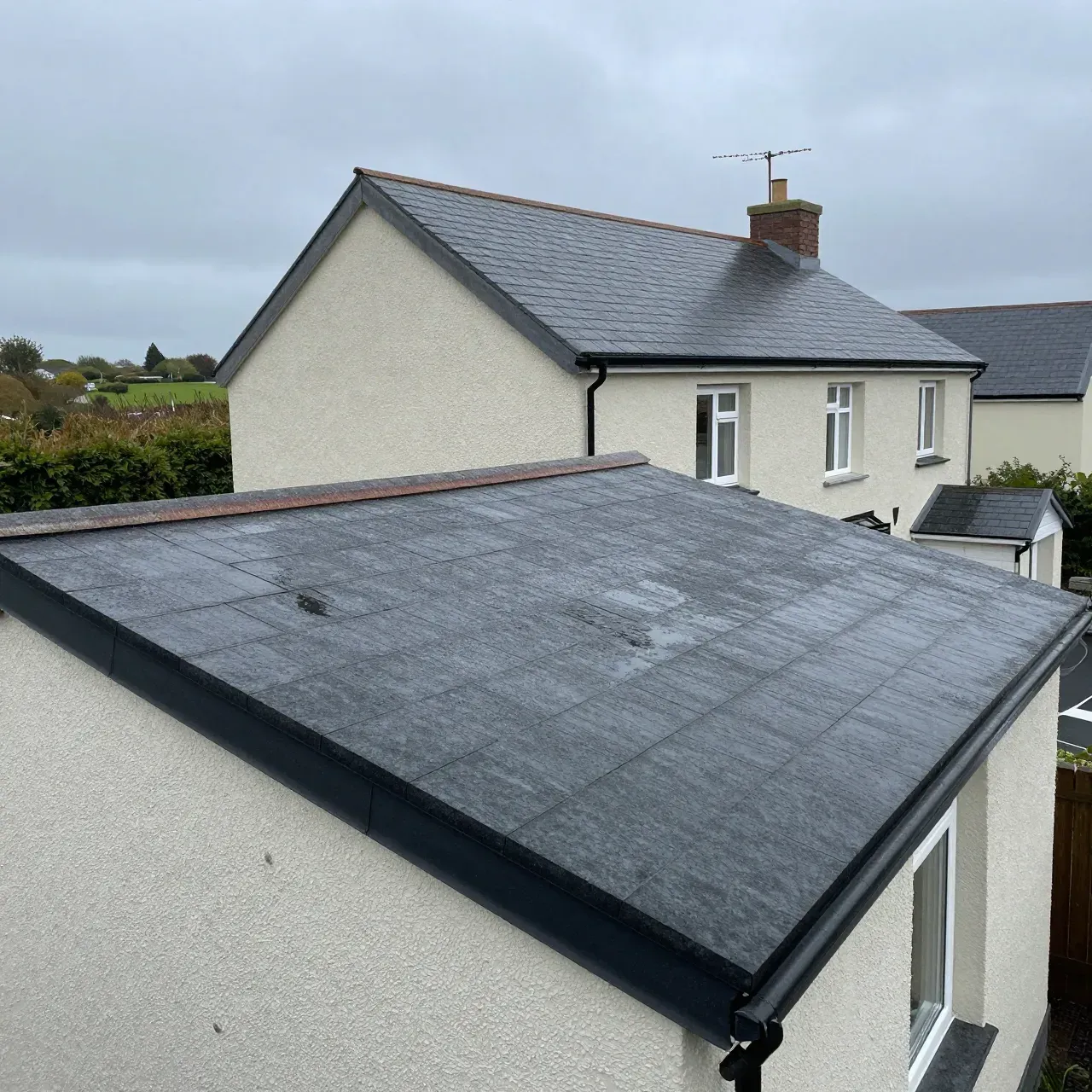
Flat roofs over extensions, garages and dormers need their own attention. Clear leaves and debris from the surface and outlets so water can drain. Look for blisters, splits, cracks, lifted edges and areas where water ponds for more than a day or two after rain. Avoid walking on felt roofs, as foot traffic can damage the surface. Small defects on flat roofs are usually straightforward to repair if they are caught early.
Keep a Simple Roof Record
A short record of your roof makes maintenance easier and is useful when you sell the house or make an insurance claim. Note the type of roof covering and its approximate age, the dates of any repairs and who carried them out, and keep receipts, guarantees and photographs together. Add notes after each check, such as a slipped slate on the rear slope or moss building up near the chimney. Over a few years this record shows which parts of the roof need regular attention and helps a roofer understand the history of the roof before any work begins. It also gives a buyer or their surveyor confidence that the roof has been properly looked after.
When to Call a Roofer
Some signs need professional attention straight away: water coming through a ceiling, missing slates or tiles after a storm, a chimney that looks unstable, sagging in the roof line or a large area of lifted flashing. Other defects, such as a few slipped slates or loose ridge tiles, are less urgent but should be repaired before the next spell of bad weather.
Even without visible problems, a professional roof inspection every two to three years is a sensible investment, and more often for older roofs. A roofer can check parts of the roof that cannot be seen from the ground and carry out small repairs before they become larger ones.
Regular checks from the ground and the attic, clear gutters and valleys, moss control and prompt repairs keep a roof working for as long as possible. A little attention through the year costs far less than repairing the damage a neglected roof can cause.
To book a roof inspection or maintenance visit, contact Patrick Hannifin Roofing. Call 085 754 7244 or email patrickhannifinroofing@gmail.com.
Recent Posts