How Roof Coatings Extend the Life of a Tiled Roof
7 April 2025
Share
Roof Painting and Coating for Irish Homes
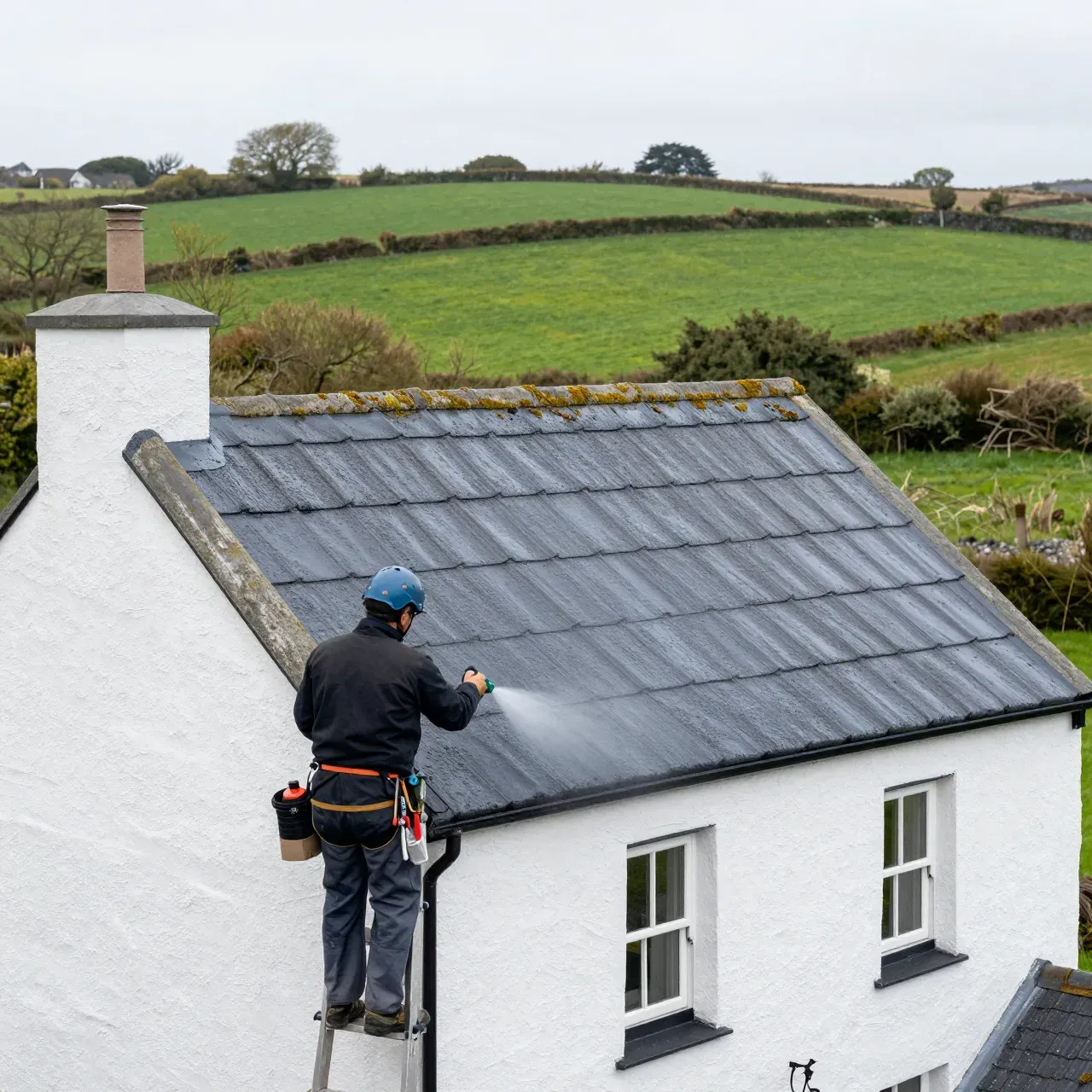
Concrete roof tiles and older slate roofs take a constant beating from Irish rain, wind and frost. Over the years the surface wears, moss and lichen take hold and the colour fades. Roof painting and protective coatings restore the appearance of a tired roof and add a layer of protection to tiles that are still structurally sound.
This article explains what roof cleaning and coating involves, which roofs benefit from it, how the work is carried out and the limits of what a coating can do. It will help you decide whether a coating is the right choice for your roof or whether repairs or replacement should come first.
Why Roof Tiles Lose Their Protective Surface
New concrete tiles leave the factory with a coloured, sealed finish. Rain, sunlight and freeze-thaw cycles gradually wear that finish away, leaving a porous surface that holds water. Once the surface stays damp, moss, algae and lichen grow quickly, especially on north-facing slopes and under trees.
Moss holds moisture against the tiles like a sponge. In winter that water freezes and expands, which opens small cracks and causes the tile surface to flake. Moss also washes into gutters and downpipes, causing blockages and overflows. The result is a roof that looks neglected and ages faster than it should.
Roofs That Benefit Most
- Concrete tile roofs between 15 and 40 years old with weathered, porous tiles
- Roofs with heavy moss or lichen growth but few broken tiles
- Faded roofs where the owner wants a fresh colour without full replacement
- Properties being prepared for sale, where kerb appeal matters
A coating is not a cure for a roof with widespread cracked tiles, failed battens or a sagging structure. Those problems need repair or replacement first.
How Roof Cleaning and Coating Is Carried Out
A proper roof coating is a multi-stage job. Skipping any stage shortens the life of the finish, so it is worth knowing what each one involves.
- Inspection. The roof is checked for broken or slipped tiles, damaged ridge and hip tiles, failed pointing and problems with flashing or valleys.
- Cleaning. Moss and debris are removed and the roof is cleaned with controlled pressure washing, taking care not to drive water under the tiles or damage the surface.
- Biocide treatment. A fungicidal wash is applied to kill remaining spores and slow regrowth.
- Repairs. Broken tiles are replaced, ridge tiles re-bedded or fitted with a dry ridge system, and gutters cleared of the debris from cleaning.
- Primer. A primer or sealer binds the porous surface and helps the topcoat adhere.
- Topcoats. Two coats of a breathable roof coating are applied in the chosen colour, usually by airless spray, with careful masking of walls, windows and vehicles.
The work depends on dry weather. Coatings need a dry surface and suitable temperatures to cure, so most coating work in Ireland is scheduled between late spring and early autumn.
What a Protective Coating Does and Does Not Do
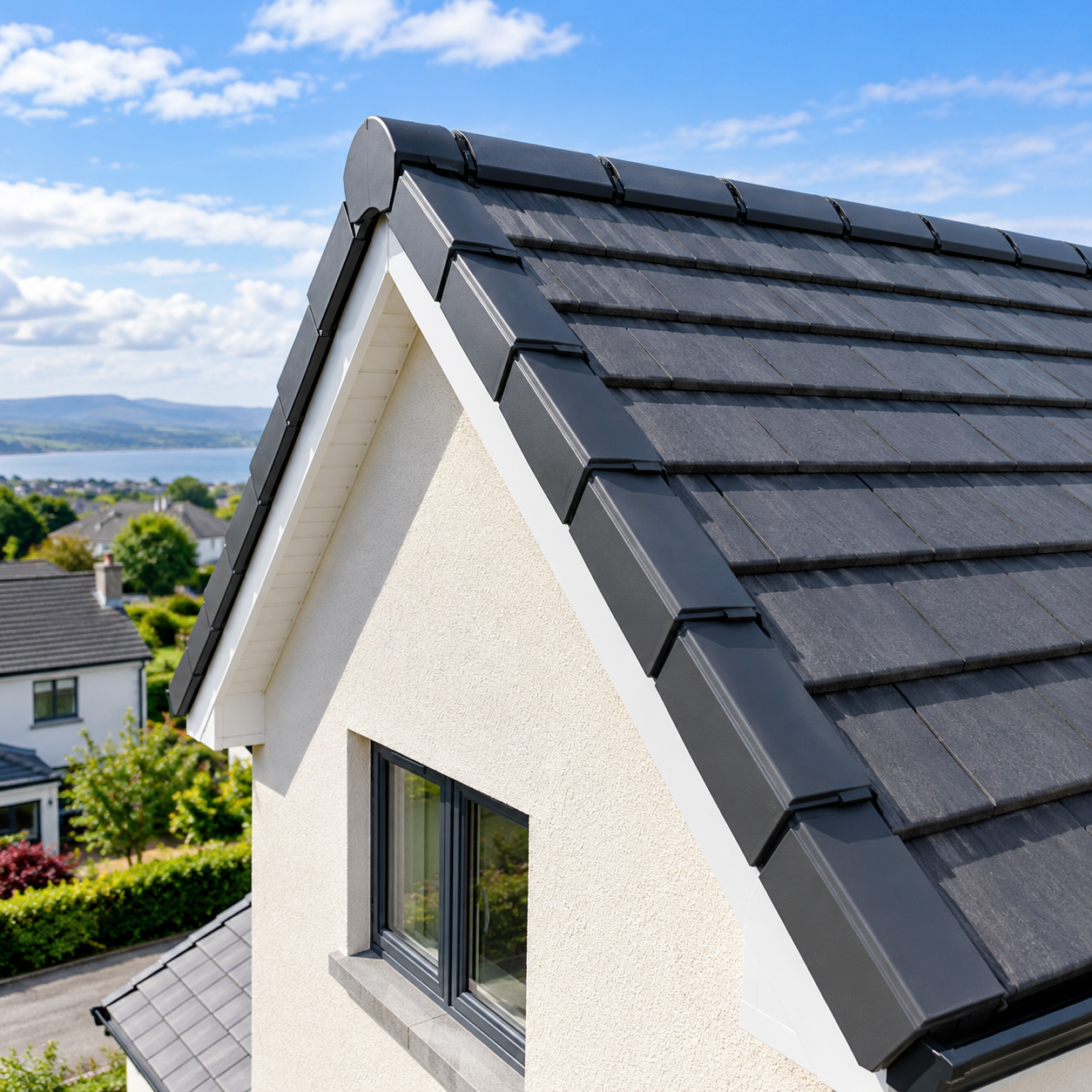
A good coating seals the tile surface so it absorbs less water, which reduces moss growth and frost damage. It restores an even colour and gives the roof a cleaner, newer look. On roofs where the tiles are sound but weathered, it can delay the need for a full re-roof by a number of years.
A coating does not repair the structure underneath. It will not fix rotten battens, a failed underlay or a sagging roof. It also cannot make a leaking valley or chimney flashing watertight on its own. That is why the inspection and repair stages matter as much as the paint itself.
Breathability Matters
Roof coatings must be breathable, allowing moisture vapour from inside the roof to escape. A non-breathable paint can trap moisture in the tiles, which leads to blistering and peeling. Products designed for roof tiles are formulated for this, and they are the only type that should be used.
Slate Roofs and Other Materials
Natural slate is a different case. Good quality slate does not need painting, and coating it can hide defects and complicate future repairs. For slate roofs, cleaning, replacing slipped or broken slates and maintaining flashing and ridges is usually the better approach. Fibre cement slates, common on many Irish homes built from the 1980s onwards, can sometimes be cleaned and coated, depending on their condition.
If you are unsure what your roof is made of, a roofer can identify it during the inspection and advise on the right treatment. Our tile and slate roofing page covers repairs to both types.
Choosing a Colour and Finish
Most homeowners in Ireland choose charcoal, slate grey, anthracite or a traditional terracotta red, as these suit the local housing style and sit well alongside neighbouring roofs. Darker colours hide weathering and dirt better over time, while lighter shades show streaking sooner. It is worth looking at nearby houses and considering the colour of your windows, fascias and render before deciding.
Some coatings are matt and others have a light sheen. A matt or low-sheen finish usually looks more natural on a pitched roof. If the house is in a conservation area or is a protected structure, check with the local authority before changing the colour of the roof.
What Affects the Cost of a Roof Coating
The price of roof cleaning and coating depends on the roof area, its pitch and height, the amount of moss and dirt to remove, and how many repairs are needed before coating. Scaffolding or access equipment, protection of the surrounding property and the number of coats also play a part. A detached bungalow with an easy-to-reach roof costs less to treat than a two-storey house with dormers and several roof slopes. A written quote should list each stage of the work, including repairs, so you can see exactly what is included.
Looking After a Coated Roof
A coated roof still needs basic care to get the most from the finish. Keep gutters clear, especially in autumn, so water drains away freely. Cut back overhanging branches that drop leaves and keep the roof shaded and damp. Have the roof looked at after severe storms, and deal quickly with any broken tile so water cannot get under the coating.
Moss will eventually return on any roof in the Irish climate, but on a properly cleaned, treated and coated roof it grows far more slowly. A light biocide treatment every few years helps keep it under control.
Coating or Re-Roofing
The right choice comes down to the condition of the tiles and the structure below them. If most tiles are intact, the battens are sound and the roof is watertight, cleaning and coating is a cost-effective way to protect it and improve its appearance. If tiles are cracking across the roof, the underlay has failed or there are repeated leaks, money is better spent on a new roof.
Patrick Hannifin Roofing provides roof cleaning and painting alongside general roof repairs, so the roof is inspected and repaired properly before any coating goes on.
Roof coatings work best on sound but weathered tile roofs, where they reduce moss, slow frost damage and refresh the look of the house. Careful cleaning, repairs and the right breathable product make the difference between a finish that lasts and one that peels.
To arrange a roof inspection and coating quote, contact Patrick Hannifin Roofing. Call 085 754 7244 or email patrickhannifinroofing@gmail.com.
Recent Posts