What Happens During a Professional Roof Repair in Ireland
7 April 2025
Share
A Professional Roof Repair From Start to Finish
Booking a roof repair is something most homeowners only do a handful of times, so it is natural not to know what the process involves. A professional roof repair in Ireland follows a fairly consistent pattern, from the first phone call and inspection through to the finished work and the clean-up. Knowing what each stage involves helps you prepare the house, understand the quote and judge whether the job has been done properly.
This article walks through each stage of a typical roof repair on a slate, tile or flat roof. It covers what the roofer will look at, how the work is carried out safely, what you may need to do before the roofer arrives and what you should expect once the job is complete.
The First Contact and Booking
Most repairs start with a phone call or message describing the problem, such as a leak in a bedroom ceiling, slates seen on the lawn after a storm or a gutter overflowing. A roofer will ask a few questions to understand the urgency, the type of roof and how many storeys the house has. Photographs taken from the ground or from inside the attic are very useful at this stage.
For emergencies, such as an open roof after storm damage or water coming through a ceiling, the priority is to make the roof safe and weathertight as quickly as possible. For less urgent repairs, an inspection visit is arranged at a suitable time.
The Roof Inspection
A thorough inspection is the foundation of a good repair. Guesswork leads to repeat call-outs and wasted money, so an experienced roofer will look at the whole roof rather than only the obvious problem. A typical inspection covers:
- The condition of slates or tiles, including any that are cracked, slipped or missing
- Ridge and hip tiles and the mortar or dry fix system holding them
- Valleys where two roof slopes meet
- Lead or other flashing at chimneys, walls and dormers
- Chimney stacks, pointing, flaunching and pots
- Fascias, soffits, gutters and downpipes
- Flat roof areas, including edges, upstands and outlets
- The attic, where timbers, underlay and insulation show the effects of any water entry
On many jobs the roofer will take photographs from the roof to show you exactly what has been found. This makes it far easier to understand the problem and the proposed solution.
The Quote and Agreeing the Work
After the inspection you should receive a clear explanation of what is wrong and what needs to be done. A good quote states the work to be carried out, the materials to be used, any access equipment needed, how long the job should take and what guarantee applies. Where the full extent of the damage can only be seen once the roof is opened up, such as rotten battens under slates, the quote should explain how that will be handled.
It is also worth checking that the roofer carries public liability insurance and that the guarantee covers both materials and workmanship. Take the time to ask questions before agreeing the work. A reputable roofer will be happy to explain why a repair is needed and whether there are alternatives.
Preparing the House and Site
On the day of the repair, a little preparation makes the work quicker and safer. Move cars away from the area under the roof where possible, and clear garden furniture, bins and plant pots from the work area. Keep children and pets away from the area where ladders and scaffolding are in use. If the attic needs to be accessed, clear a path to the hatch and move stored items away from the area of the repair.
Safe Access to the Roof
Safety comes first on any roofing job. Depending on the height of the house and the nature of the repair, access may be by ladder and roof ladder, a mobile tower or full scaffolding. Larger repairs, chimney work and anything on a two-storey house over a long period usually need scaffolding with edge protection. The cost of access is part of the job and should be included in the quote.
How Common Repairs Are Carried Out
Slate and Tile Repairs
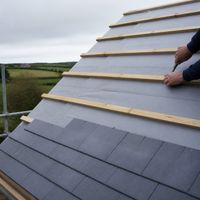
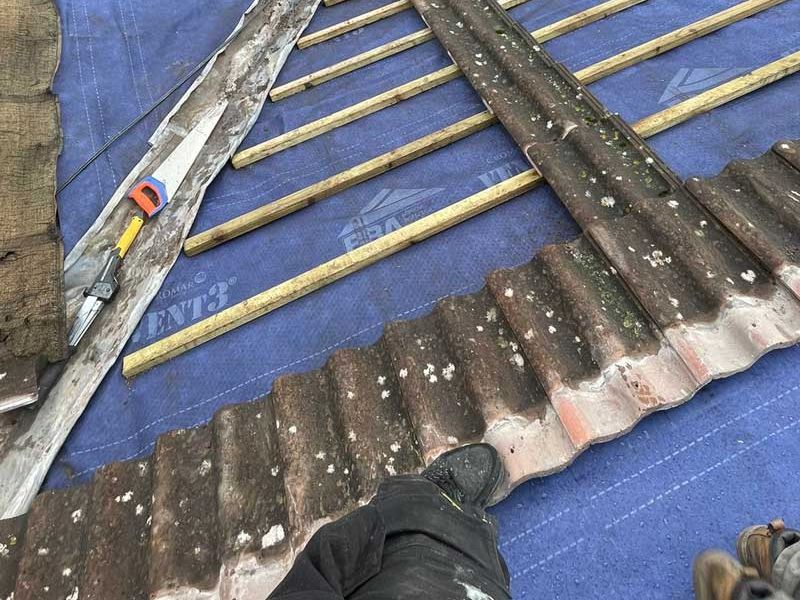
Slipped or broken slates are removed and replaced with matching slates, secured with copper or stainless steel clips or nails. Broken tiles are swapped out and the surrounding tiles checked for movement. Where battens or underlay have rotted, a section of the roof is stripped back, the timber and membrane replaced, and the slates or tiles refixed.
Ridge, Hip and Verge Repairs
Loose ridge and hip tiles are lifted, cleaned and re-bedded on fresh mortar, or fixed mechanically with a dry ridge system that does not rely on mortar. Gable verges can be repointed or fitted with a dry verge system.
Flashing and Valley Repairs
Leaking flashing is cut out and replaced with new lead dressed into place, with the top edge chased into the mortar joint and sealed. Worn valleys are relined with lead or a modern valley system.
Flat Roof Repairs
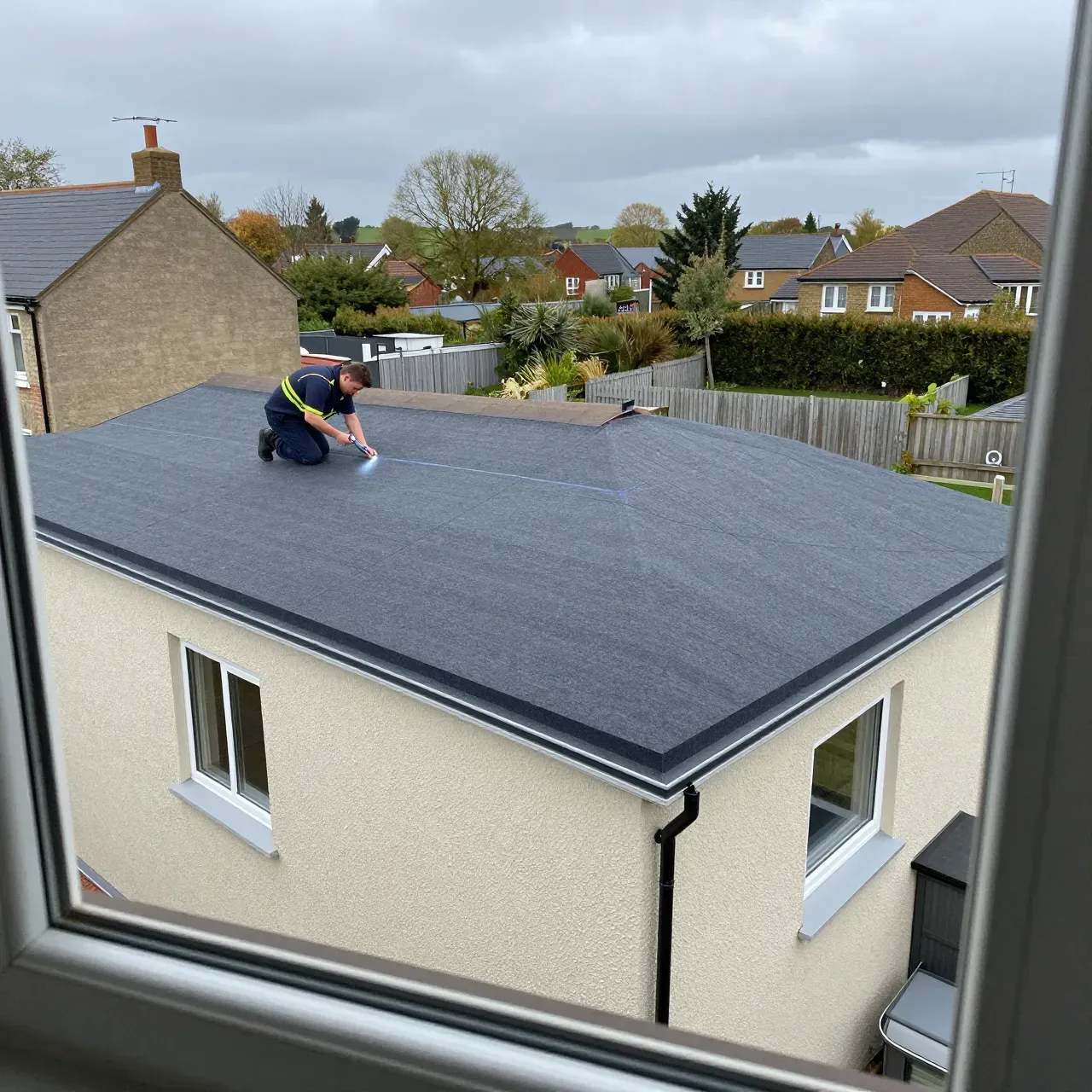
On flat roofs, splits, blisters and lifted edges are cut out and patched, or the roof is recoated with a liquid waterproofing system where the surface is worn but the deck is sound. More detail is on our flat roofs page.
Checking and Finishing the Work
Once the repair is complete, the roofer should check the surrounding area, confirm that water now drains correctly and inspect the attic to make sure the source of the leak has been dealt with. All debris, old slates and offcuts should be removed and the gutters cleared of anything that fell into them during the work.
You should then receive a short explanation of what was done, ideally with photographs, together with any advice on further work that may be needed in future. Keep this record with your house documents, as it is useful for insurance claims and when selling the property.
How Long a Roof Repair Takes
Most minor repairs, such as replacing a few slates or resealing a flashing, are finished in a few hours. Re-bedding a ridge line, relining a valley or repairing a chimney can take a day or two, and longer if scaffolding is required. Weather plays a part in every job. Roofers will not work in high winds or heavy rain, and some materials, such as mortar and liquid coatings, need dry conditions to set properly.
After the Repair
Allow damp ceilings and attic timbers time to dry before redecorating. Stained ceilings should be sealed with a stain-blocking primer before painting, otherwise the marks often show through again. Replace any insulation that was soaked. If you notice any further sign of water after the next heavy rain, let the roofer know straight away so it can be checked.
Our roof repairs page sets out the full range of repairs we carry out on homes and commercial buildings across Ireland.
A professional roof repair follows a clear process of inspection, quotation, safe access, careful repair and a proper finish. Knowing what to expect at each stage helps you prepare and makes it easy to see that the job has been done right.
To book a roof inspection or repair, contact Patrick Hannifin Roofing. Call 085 754 7244 or email patrickhannifinroofing@gmail.com.
Recent Posts