Why a Small Roof Leak Should Be Repaired Straight Away
7 April 2025
Share
The Real Cost of Leaving a Small Roof Leak
A small roof leak rarely looks serious. A brown mark on the ceiling, a drip in the attic during heavy rain or a damp corner in an upstairs bedroom is easy to put off until the weather improves. In the Irish climate, though, a roof that lets in a little water will usually be letting it in for weeks or months at a time, and the damage builds up out of sight.
This article explains what happens inside a roof when a minor leak is left alone, how to recognise a leak early, what you can safely do in the short term and how a roofer finds and repairs the source. The aim is simple: a small roof leak repair done promptly costs a fraction of the work needed once the water has spread.
Where Small Roof Leaks Usually Start
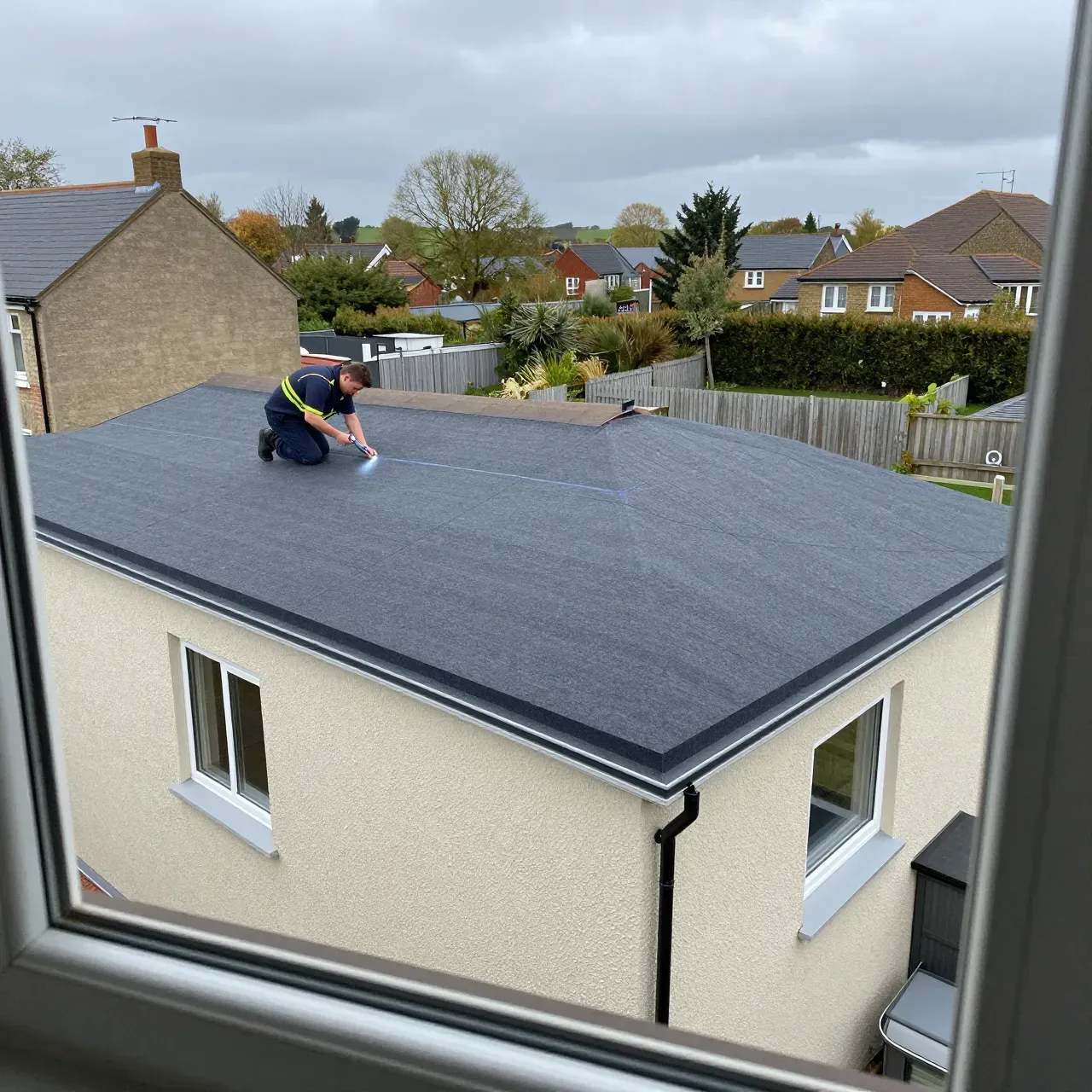
Most leaks begin at a single weak point. On pitched roofs the common culprits are a slipped or cracked slate or tile, a gap in the flashing where the roof meets a chimney or wall, a worn valley, or cracked mortar on ridge and hip tiles. On flat roofs, leaks often start at a split in the felt, a lifted edge trim or a failed seal around a rooflight or vent pipe.
Because water travels along timbers and underlay before it drips, the stain on your ceiling is often some distance from the actual entry point. That is one reason why guessing at the cause and patching the wrong spot so often fails.
What Happens When a Leak Is Left Alone
Water that gets past the slates or felt does not simply evaporate. It soaks into whatever it reaches and stays there, particularly through the long, damp Irish winter.
Roof Timbers Begin to Rot
Battens, rafters and wall plates absorb moisture each time it rains. Over months, wet timber develops wet rot, loses strength and starts to crumble. Rotten battens no longer hold slates securely, which leads to more slipped slates and a larger leak. Replacing rotten rafters or wall plates is major work compared to fixing a single slate.
Insulation Stops Working
Attic insulation that gets wet compresses and loses most of its insulating value. Wet insulation also holds moisture against the ceiling below. The result is higher heating bills, cold spots in upstairs rooms and insulation that usually has to be removed and replaced.
Ceilings and Walls Are Damaged
Plasterboard ceilings soften and stain when they stay damp. In bad cases they sag or collapse. Water can also run down inside walls, damaging plaster, paintwork and skirting boards, and in some cases reaching electrical cables and light fittings, which is a safety risk.
Mould and Damp Spread
A damp attic and damp ceilings create ideal conditions for mould. Mould spreads across timber, insulation and plaster, causes musty smells and can affect the health of people living in the house, particularly children and anyone with asthma.
Early Signs Worth Acting On
Many roof leaks are found late because the first signs are subtle. Check for these, especially after a spell of heavy rain or a storm:
- Brown or yellow water stains on ceilings, even small ones
- Peeling paint or bubbling plaster near the top of walls
- A musty smell in upstairs rooms or the attic
- Damp or darkened timber, or wet insulation, in the attic
- Daylight visible through the roof from inside the attic
- Slipped, cracked or missing slates visible from the ground
- Moss or water staining around chimneys and valleys
Taking a torch into the attic during or just after rain is one of the most useful checks a homeowner can make. Look for drips, wet patches on the underlay and water marks on the rafters.
Safe Short-Term Steps
Until a roofer can carry out a repair, there are a few sensible steps you can take from inside the house. Place a bucket or container under any drip and lay towels or plastic sheeting to protect floors. If a ceiling is bulging with water, keep people away from that area and switch off lights in the affected room at the fuse board. In the attic, move stored items away from wet areas and lift wet insulation to let the ceiling dry.
Avoid climbing onto the roof yourself. Wet slates and tiles are extremely slippery, and many roof surfaces cannot take a person's weight safely. Roof work at height is a job for an experienced roofer with the right access equipment.
How a Roofer Finds and Repairs the Leak
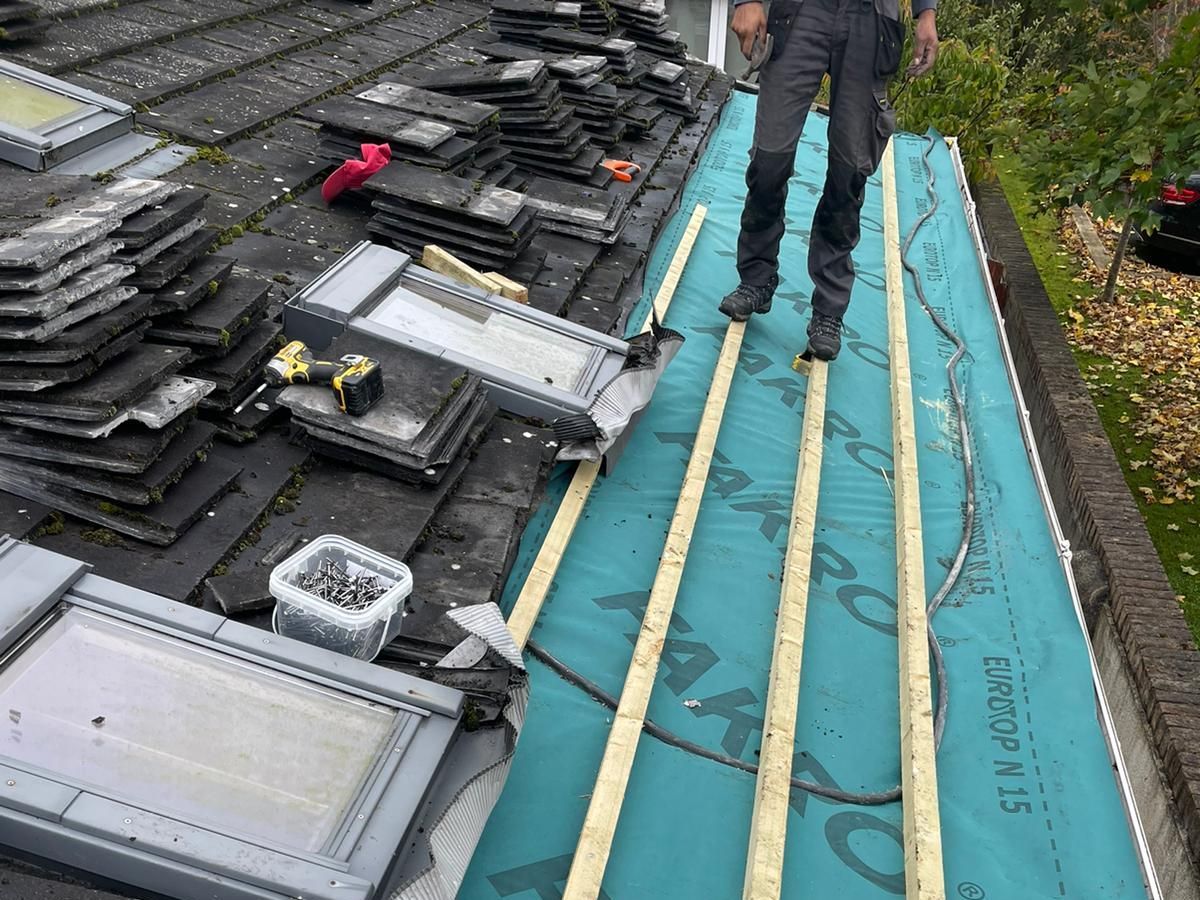
A proper repair starts with finding the true source. The roofer will normally look at the roof from outside, check the attic from inside and trace the path of the water back to its entry point. Typical repairs include:
- Replacing slipped, cracked or missing slates and tiles and refixing them securely
- Renewing or resealing lead flashing at chimneys, walls and abutments
- Repairing or relining valleys where two roof slopes meet
- Re-bedding ridge and hip tiles, or fitting a mechanically fixed dry ridge system
- Patching splits or lifted edges on flat roofs, or recoating where the surface is worn
- Replacing any rotten battens and damaged underlay found during the repair
Once the cause is fixed, the attic and ceilings can dry out. Damaged insulation should be replaced and stained ceilings treated with a stain-blocking primer before repainting. Our roof repairs service covers all of these jobs on slate, tile and flat roofs.
Why Timing Matters in Ireland
Ireland's weather leaves very little time for a leaking roof to dry out between showers. A leak first noticed in October can be wetting the same timbers through to March. Autumn storms often turn a single slipped slate into several missing ones, and frost widens cracks in mortar and slates. Arranging a repair as soon as a leak appears, rather than waiting for spring, keeps the damage limited to the original defect.
Insurance is another reason to act quickly. Many home insurance policies cover sudden storm damage but exclude damage caused by wear and tear or by a problem the homeowner knew about and did not deal with. A prompt repair, with photographs and a written note from the roofer, makes any claim more straightforward.
How Long a Typical Leak Repair Takes
Most small roof leak repairs are completed in a single visit. Replacing a few slates, resealing a section of flashing or patching a flat roof split is usually a job of a few hours once access is in place. Larger repairs, such as relining a valley or replacing rotten battens across part of a roof slope, can take a day or two and may need scaffolding. The roofer should explain what was found, what was repaired and whether anything else on the roof needs attention in the near future.
Preventing the Next Leak
Most leaks can be prevented with simple maintenance. Keep gutters and valleys clear of leaves and moss, have the roof checked after severe storms, and arrange a general inspection every couple of years, especially on older roofs. Chimneys deserve particular attention, as flashing and pointing around the stack are common leak points, and our chimney repairs page explains the work involved.
A small roof leak is a warning that one part of the roof has failed. Repairing it quickly protects the timbers, insulation and ceilings, and keeps the cost to a single, straightforward repair.
If you have noticed a stain, drip or damp patch, contact Patrick Hannifin Roofing to arrange an inspection. Call 085 754 7244 or email patrickhannifinroofing@gmail.com.
Recent Posts