Common Causes of Roof Leaks and How They Are Repaired
7 April 2025
Share
Where Roof Leaks Come From and How Each One Is Fixed
Roof leaks in Ireland are rarely random. The same handful of weak points account for most of them, whether the house is a 1970s bungalow, a Victorian terrace or a modern semi-detached home. Understanding the common causes of roof leaks makes it easier to recognise what is happening when a stain appears on the ceiling, and to understand what a roofer means when they explain the repair.
This article works through the most common causes of roof leaks on pitched and flat roofs, how each one is traced and how it is repaired properly. It also explains why some leaks are hard to find and why a lasting repair deals with the cause rather than the symptom.
Slipped, Cracked and Missing Slates or Tiles
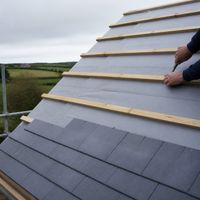
The most familiar cause of a roof leak is a gap in the roof covering itself. Natural slates are held by nails, and over decades those nails corrode, a condition roofers call nail sickness. Slates then slide out of position, leaving a gap. Concrete tiles crack from frost or impact, and both slates and tiles can be lifted or blown off in storms.
The repair is to remove any broken pieces, replace them with matching slates or tiles and secure them correctly. Individual slates are usually fixed with copper or stainless steel clips, known as tingles or hooks, because the original nail holes cannot be reached without stripping the slates above. Where many slates are slipping across a roof slope, it is a sign that the fixings have failed generally and a partial or full re-slate may be the better long-term option.
Failed Flashing
Flashing seals the joints where the roof meets something else: chimneys, side walls, dormers, rooflights and soil pipes. Lead is the traditional material, and it lasts a long time when properly installed. Problems arise when lead splits from thermal movement, when it slips because it was not fixed correctly, or when the mortar holding its top edge into the wall crumbles away. Many older houses also have cement fillets in place of lead, and these crack and pull away from the wall over time.
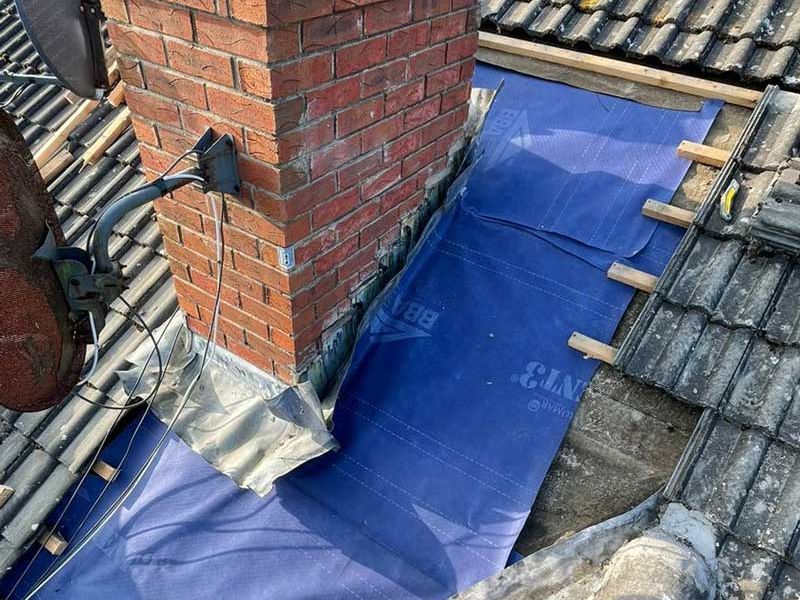
Flashing leaks often appear on ceilings near a chimney breast or along an external wall. The repair is to cut out the failed flashing and dress new lead into place, with stepped flashings and soakers on the sides of a chimney, a back gutter behind it and the top edge chased into the mortar joints and sealed.
Worn or Blocked Valleys
A valley is the internal angle where two roof slopes meet. It carries a large volume of water, so any weakness shows up quickly. Lead valleys can split, older valleys lined with felt or mortar can crack, and all valleys collect leaves and moss that dam the water and push it sideways under the slates.
Clearing a blocked valley is often enough to stop the leak. Where the lining has failed, the slates or tiles along the valley are lifted, the old lining removed and a new lead or pre-formed valley fitted before the roof covering is relaid.
Ridge and Hip Tiles
Ridge tiles run along the top of the roof and hip tiles along the external corners. Traditionally they are bedded on mortar, which cracks and washes out over time. Loose ridge tiles let water in at the very top of the roof and can be blown off in high winds.
The repair is to lift the loose tiles, clean off the old mortar and re-bed them on fresh mortar, or to replace the wet-bedded ridge with a dry ridge system that fixes each tile mechanically and does not depend on mortar. Dry systems need less maintenance and resist wind uplift better.
Chimney Stacks
Chimneys are a frequent source of leaks because they are so exposed. Water gets in through eroded mortar joints, cracked render, failed flaunching at the top of the stack and open, uncapped flues. Water entering the stack itself can travel down inside the brickwork and appear well below the roofline, on a chimney breast inside the house.
Repairs include repointing, renewing the flaunching, fitting ventilated caps to unused flues and replacing the flashing at the base. Our chimney repairs page explains this work in more detail.
Flat Roof Failures
Flat roofs over extensions and garages are among the most common leak sources in Irish homes. Typical causes include:
- Splits and cracks in ageing felt caused by movement and weathering
- Blisters that form when moisture is trapped under the covering
- Lifted edges and failed trims at the roof perimeter
- Poorly sealed upstands where the flat roof meets the house wall
- Ponding water that sits in hollows and finds any weakness
- Damaged seals around rooflights, vents and pipes
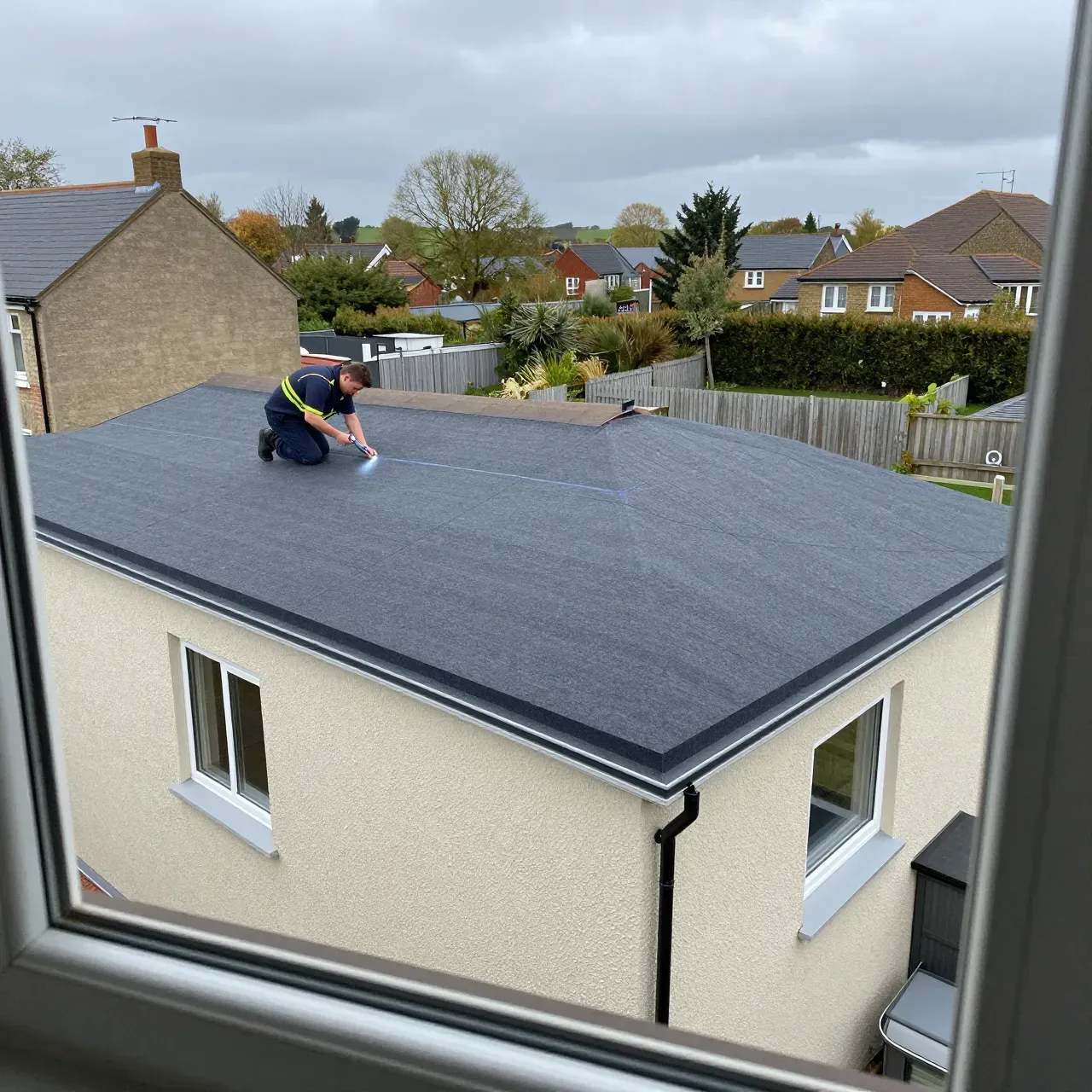
Small defects can be cut out and patched or overlaid. Where the covering has failed across the whole roof, or the deck beneath is wet, a full replacement with torch-on felt, fibreglass or a liquid system is the lasting solution. More information is on our flat roofs page.
Rooflights and Roof Windows
Rooflights and roof windows let in a great deal of light, but every opening in a roof is a potential leak point. Leaks usually come from failed flashing kits around the frame, perished seals or condensation forming on cold glazing. On flat roofs, the upstand around a rooflight is a common weak spot if the waterproofing was not carried up and sealed correctly. Repairs range from renewing the flashing and seals to replacing the unit where the frame itself has failed. Our team also carries out skylight and roof window repairs as part of general roofing work.
Gutters and Eaves
Not every leak that looks like a roof leak comes from the roof. Blocked or sagging gutters can overflow back towards the house, soaking the fascia, the top of the wall and the ceiling inside. Damaged felt at the eaves, where the roof membrane should drain into the gutter, can also let water into the wall plate and the edge of the ceiling. Clearing and realigning gutters and fitting an eaves protection system usually solves the problem.
Condensation That Looks Like a Leak
Condensation in the attic is often mistaken for a roof leak. Warm, moist air from the house rises into the roof space and condenses on the cold underside of the roof, then drips onto insulation and ceilings. It is most noticeable in cold weather and is common in homes where insulation has been added without enough ventilation. The cure is better ventilation through soffit vents, tile vents or ridge vents, not a roof repair. A roofer can tell the difference by checking where the moisture is and how it behaves in dry, cold weather.
Why Some Leaks Are Hard to Find
Water travels before it drips. It can run along a rafter, across the top of the underlay or down the inside of a chimney stack, and appear on the ceiling several metres from where it entered the roof. Leaks that only appear in wind-driven rain from one direction add to the challenge. Finding the real entry point usually means checking the roof outside and the attic inside together, sometimes during rain, and following the path of the water back to its source. Our roof repairs service always starts with this tracing work.
Most roof leaks in Ireland come from slipped slates, failed flashing, worn valleys, loose ridge tiles, chimneys, flat roof defects and blocked gutters. Identifying the true cause and repairing it properly gives a lasting fix rather than a temporary patch.
If you have a roof leak that needs tracing and repairing, contact Patrick Hannifin Roofing. Call 085 754 7244 or email patrickhannifinroofing@gmail.com.
Recent Posts